Multi-Treatment vs Single-Treatment Lasers: Which Is Better for Your Clinic?
Are multi-treatment laser machines less powerful than single-treatment lasers?
It's a common assumption in the aesthetics industry. Surely a laser designed specifically for hair removal must perform better than a machine that also offers tattoo removal, skin rejuvenation and other treatments?
It sounds logical, but multi-treatment lasers aren't necessarily less powerful or less effective than dedicated single-treatment machines.
The reality depends on how the equipment has been engineered.
In this guide, we'll explain how single-treatment and multi-treatment laser machines differ, whether combining technologies affects performance, and which type of laser is likely to be the better investment for your clinic.
What Is the Difference Between a Single-Treatment and Multi-Treatment Laser?
A single-treatment laser is designed to perform one particular type of treatment.
A good example is a diode laser hair removal machine. Most diode lasers have one handpiece designed specifically for removing unwanted hair.
A multi-treatment laser machine, on the other hand, combines several technologies within one platform, typically using interchangeable handpieces.
For example, a multi-treatment system might include:
Diode laser: For laser hair removal.
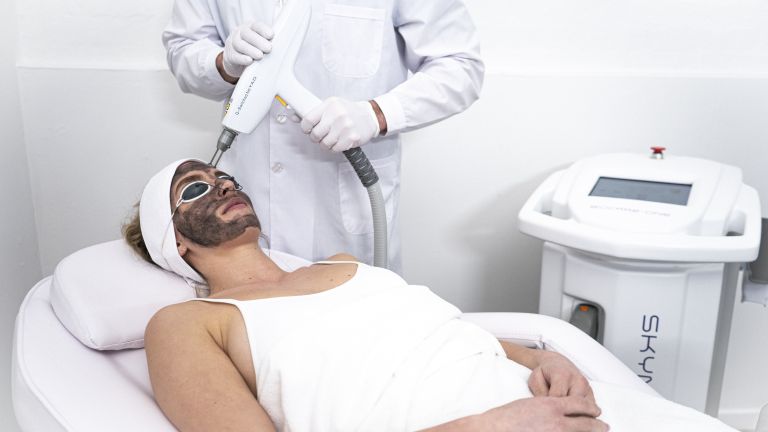
Q-switched Nd laser: For tattoo removal and carbon facials.
IPL: For a range of skin and hair treatments.
Erbium laser: For skin resurfacing and other skin treatments.
Rather than purchasing a separate machine for each treatment, a clinic can offer multiple services from one device.
But does combining all these technologies mean sacrificing performance?
Not necessarily.
Are Multi-Treatment Lasers Less Powerful Than Single-Treatment Lasers?
No. A properly engineered multi-treatment laser can deliver the same performance as a dedicated single-treatment machine.
The key is understanding how the technologies are combined.
Let's use two Skyncare systems as an example.
Single-treatment example: UltraDiode
The UltraDiode is a medical-grade diode laser designed specifically for hair removal.
It operates at a wavelength of 810nm, widely regarded as a gold-standard wavelength for laser hair removal.
Its purpose is straightforward: deliver effective laser hair removal treatments.
Multi-treatment example: Solaris
The Solaris is a multi-treatment platform capable of performing over 20 different treatments using five handpieces.
These include technologies for hair removal, tattoo removal, skin resurfacing, acne scarring and other aesthetic applications.
Importantly, the Solaris incorporates the same diode technology used in the UltraDiode.
The diode performance, output and specifications are the same on both systems.
The difference is that Solaris also incorporates additional technologies, allowing the clinic to perform a much wider range of treatments.
So how is this possible without compromising the performance of the individual technologies?
How Do Multi-Treatment Laser Machines Work?
To understand how multiple laser technologies can operate within one machine, it's useful to look at the components inside a laser system.
Imagine you have two separate machines:
- A diode laser for hair removal.
- A Q-switched Nd laser for tattoo removal.
Although these machines produce different types of laser output, they share several components.
For example, both machines typically require:
- A display screen
- A control board
- A cooling system
- Internal electronics and supporting components
If we combine these two technologies into one machine, we don't necessarily need two of everything.
Both technologies can share components without compromising their individual performance.
We only need one screen, one appropriately designed cooling system and a control system capable of managing the different technologies.
However, certain components must remain specific to each laser technology.
For example, a diode laser and a Q-switched Nd laser have different power supply requirements because they produce different types of pulses and outputs.
These technology-specific components must still be included.
The result is a machine that combines multiple technologies while removing unnecessary duplication of components.
This is essentially how the Solaris platform works.
It contains the components required to operate its individual treatment technologies, while sharing the supporting systems that don't need to be duplicated.
Think of It Like Your Smartphone
A useful comparison is your smartphone.
Years ago, you might have needed a separate camera, calculator, map and telephone.
Today, all these functions are combined into one device.
Your smartphone doesn't need a separate screen, battery or user interface for every function.
The individual applications share many of the same components, while using specialised hardware where required.
Multi-treatment laser platforms can work in much the same way.
Combining several functions into one device doesn't automatically mean that each function performs less effectively.
Of course, not every manufacturer engineers its machines in the same way. This explanation reflects the design of Skyncare's systems, and it's important to assess other manufacturers' equipment individually.
What Are the Advantages of a Multi-Treatment Laser Machine?
For many clinics, particularly small and medium-sized businesses, multi-treatment lasers offer several important advantages.
1. Save Valuable Clinic Space
One of the biggest advantages is the amount of space saved.
Rather than having separate machines for hair removal, tattoo removal and skin rejuvenation, a multi-treatment system allows you to perform all these treatments from one platform.
This can be particularly valuable for smaller clinics where treatment-room space is limited.
2. Lower Equipment Investment
Purchasing one multi-treatment machine is typically more cost-effective than buying several individual machines.
Although a multi-treatment platform may cost more initially than a dedicated single-treatment laser, it can be considerably cheaper than purchasing multiple machines to provide the same range of services.
3. More Revenue Opportunities
Offering more treatments means having more services to sell to your existing client base.
For example, a client visiting your clinic for laser hair removal might also be interested in skin rejuvenation or tattoo removal.
With a multi-treatment machine, you can introduce additional services without needing to invest in a completely separate system for each one.
This provides opportunities to diversify your clinic's revenue streams.
4. Lower Ongoing Servicing Costs
Laser machines require regular servicing and maintenance.
If you own several separate machines, each will typically need its own service.
With a multi-treatment platform, you're maintaining one machine rather than several.
This can significantly reduce your long-term equipment servicing costs.
What Are the Advantages of a Single-Treatment Laser Machine?
Multi-treatment machines have clear benefits, but there are situations where dedicated single-treatment lasers make more commercial sense.
1. Better for Specialist Clinics
If your clinic focuses exclusively on one treatment, there's little reason to invest in technologies you don't intend to use.
For example, if you're opening a clinic specialising in laser hair removal, a dedicated diode laser may be the most sensible investment.
It provides the technology you need without paying extra for additional treatment capabilities.
2. Multiple Treatments Can Run Simultaneously
One important limitation of a multi-treatment machine is that it can generally only treat one client at a time.
Even if the machine offers 20 different treatments, you can't use it to perform hair removal in one room while simultaneously providing tattoo removal in another.
For a larger clinic with multiple treatment rooms, separate machines can therefore be more commercially productive.
You could have a diode laser operating in one room and a tattoo removal laser in another, generating revenue from both treatments simultaneously.
3. Reduced Downtime Risk
Having multiple machines also provides some protection against equipment downtime.
Imagine a busy laser hair removal clinic with two dedicated diode lasers.
If one develops a fault, the clinic can potentially continue treating clients using the second machine, subject to diary availability.
With a single multi-treatment machine, a fault affecting the main system could interrupt several treatment services at once.
However, there's an important distinction here.
If the multi-treatment machine has interchangeable handpieces and the fault is isolated to one handpiece, the other technologies may remain operational.
The impact therefore depends on the nature of the fault.
When Should You Buy a Single-Treatment Laser?
A dedicated single-treatment laser is likely to be the better option if:
- Your clinic specialises in one particular treatment, such as laser hair removal.
- You don't intend to introduce other laser treatments.
- You want to minimise your initial equipment investment.
- You have multiple treatment rooms and want to treat clients simultaneously.
- You're planning to build a larger clinic with several machines operating throughout the day.
For example, if your business model is built around becoming a specialist laser hair removal clinic, a dedicated diode laser could be the most logical choice.
You're investing in exactly the technology you need without paying for functions that won't generate revenue.
When Should You Buy a Multi-Treatment Laser?
A multi-treatment machine is often the better investment if:
- You're starting a new aesthetic clinic.
- You operate a small or medium-sized business.
- You have limited treatment-room space.
- You want to introduce several laser treatments.
- You want to offer additional services to your existing clients.
- You want to reduce the cost of purchasing and maintaining multiple machines.
- You're looking to diversify your clinic's revenue streams.
For example, if you're opening a new clinic and want to offer laser hair removal, tattoo removal and skin rejuvenation, purchasing three separate machines may be unnecessarily expensive.
A properly engineered multi-treatment platform could allow you to introduce those services from a single device.
It may also provide a more cost-effective route to expanding your treatment menu over time.
Which Laser Machine Is the Better Investment for Your Clinic?
Ultimately, the choice between a single-treatment and multi-treatment laser shouldn't be based on the assumption that one is inherently more powerful.
A multi-treatment machine doesn't automatically compromise on performance simply because it incorporates several technologies.
With Skyncare's UltraDiode and Solaris, for example, the diode technology delivers the same specifications and performance regardless of which platform it's installed in.
However, that doesn't mean every multi-treatment machine on the market will perform identically to a dedicated system.
The quality of the engineering and the technology inside the machine are what matter.
The more important questions are commercial:
- What treatments do you want to offer?
- How many treatment rooms do you have?
- Will you need to treat multiple clients simultaneously?
- Are you planning to specialise or diversify?
- What is your equipment budget?
- How do you expect your business to grow?
For a specialist clinic focusing on one service, a dedicated laser may make perfect sense.
For a small or medium-sized clinic looking to offer a broad range of treatments, a multi-treatment platform may provide much better value.
The best laser isn't necessarily the one that does the most treatments or the fewest. It's the one that best suits your clinic, your goals, your diary and your budget.
Frequently Asked Questions
Are multi-treatment lasers less effective than single-treatment lasers?
Not necessarily. A properly engineered multi-treatment laser can deliver the same performance as a dedicated single-treatment machine. The result depends on the technologies and components used, rather than simply how many treatments the machine offers
Can a multi-treatment laser be as powerful as a dedicated diode laser?
Yes. For example, Skyncare's Solaris multi-treatment platform uses the same diode technology as the dedicated UltraDiode system, providing the same output and performance for laser hair removal.
Are multi-treatment laser machines more expensive?
A multi-treatment machine will typically cost more than a single dedicated laser. However, purchasing one platform that offers several treatments can be considerably more cost-effective than buying multiple individual machines.
Are multi-treatment lasers suitable for small clinics?
Yes. Multi-treatment lasers can be particularly suitable for small and medium-sized clinics because they save space, offer a wider range of treatments and can reduce the need to purchase and service several separate machines.
Can a multi-treatment laser treat two clients at once?
No, although a multi-treatment machine can offer numerous treatments, it typically operates on one client at a time. Larger clinics wanting to treat several clients simultaneously may benefit from having multiple machines.
What happens if a multi-treatment laser breaks down?
If a fault affects the main machine, several treatment functions may become unavailable. However, if the problem is isolated to an interchangeable handpiece, the other treatment functions may continue to operate.
Should I buy a diode laser or a multi-treatment laser?
If your clinic specialises exclusively in hair removal, a dedicated diode laser may be the most cost-effective option. If you want to offer hair removal alongside other treatments, a multi-treatment platform may provide greater flexibility and better long-term value.
What is the best laser machine for a new aesthetic clinic?
There isn't one machine that's best for every clinic. A multi-treatment laser may be particularly attractive for a new business wanting to offer several services with limited space and equipment investment. A dedicated laser may be more suitable for a clinic specialising in one treatment.
About the Author
Rob Knowles is a qualified Biomedical Engineer with over a decade of direct experience in medical laser technology. He is a certified Laser Protection Advisor (LPA) and serves as General Secretary of the Association of Laser Safety Professionals — one of only two professional LPA groups officially recognised by the MHRA in the UK.
From medical physics to aesthetic clinical application, Rob understands laser technology at every level — from the atom to the aesthetician.