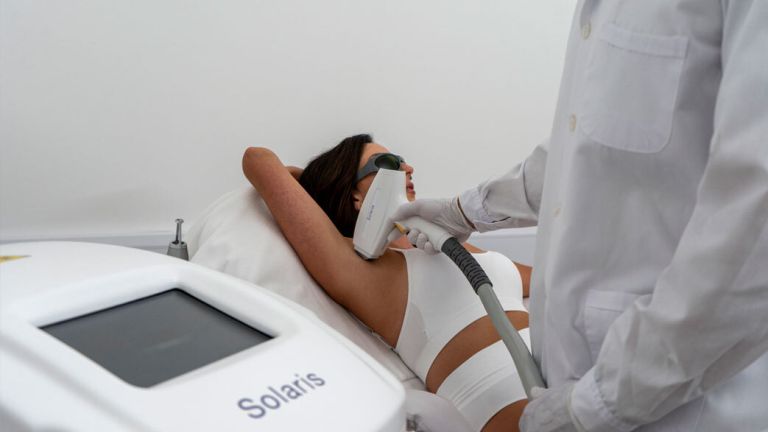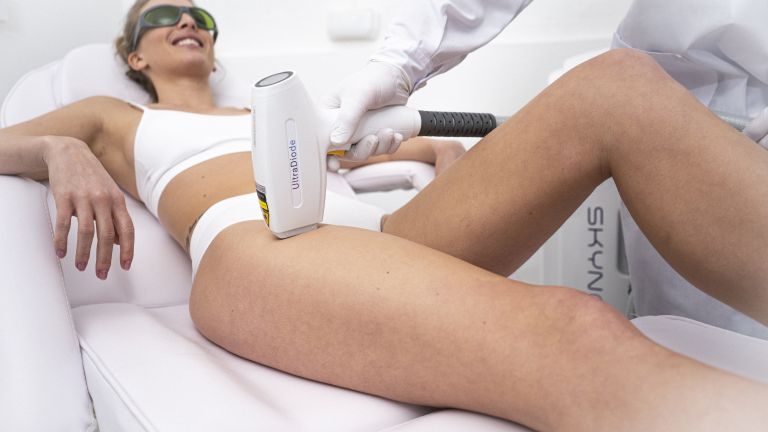
If there’s one thing we know at Skyncare, it’s laser technology.
As a specialist supplier of medical-grade diode laser systems in the UK, we regularly speak with clinic owners who feel overwhelmed by bold marketing claims, technical jargon, and conflicting advice. The aesthetics industry is saturated with promises — and increasingly, AI-generated content that oversimplifies complex laser engineering.
This knowledge base article provides the science, engineering insight, and regulatory clarity you should understand before investing in a diode laser for hair removal.
What Is a Diode Laser?
A diode laser is a semiconductor-based laser that can be electronically tuned to emit a specific wavelength of light.
Unlike solid-state lasers such as:
- Nd:YAG (1064nm)
- Alexandrite (755nm)
— which are limited by the physical properties of their lasing medium — diode technology allows manufacturers to engineer the wavelength more precisely.
This flexibility enables optimisation specifically for laser hair removal, rather than adapting technology originally designed for other medical purposes.
Why Wavelength Matters in Laser Hair Removal
Successful laser hair removal is built on a fundamental scientific principle known as selective photothermolysis. In simple terms, this means delivering light energy that is selectively absorbed by the intended target — the melanin within the hair follicle — while minimising absorption by surrounding tissue.
To achieve this, wavelength selection is critical.
When a laser is fired into the skin, its energy interacts with multiple chromophores present in the treatment area. The most relevant are melanin (the primary target), haemoglobin within blood vessels, and water within the tissue. Each of these absorbs light differently depending on the wavelength used.
An effective hair removal wavelength must strike a precise balance. It must provide strong enough absorption in melanin to heat and disable the follicle, yet avoid excessive absorption in competing chromophores that could increase discomfort or risk. At the same time, it must penetrate deeply enough to reach the base of the follicle without depositing unnecessary energy into the epidermis.
This is where engineering precision matters.
The Gold Standard: 810nm
At 810nm, we find what is widely considered the optimal balance for diode laser hair removal.
This wavelength provides strong melanin absorption while allowing sufficient penetration depth to effectively target the hair bulb and bulge region. Importantly, it maintains a favourable safety profile across a broad range of skin types, making it particularly suitable for the diverse patient demographics seen in UK clinics.
Shorter wavelengths such as 755nm offer higher melanin absorption but increase epidermal risk, particularly in darker skin types. Longer wavelengths such as 1064nm penetrate more deeply but require significantly higher fluence levels to achieve the same level of follicular heating.
The 810nm wavelength sits in the “sweet spot” between these extremes.
For this reason, properly engineered 810nm diode systems are widely recognised as the gold standard for laser hair removal — not because of marketing trends, but because of photothermal physics.
Reputable UK laser suppliers focus on optimising this wavelength rather than diluting it with unnecessary additions.
The Misconception of Triple-Wavelength Diode Lasers
In recent years, manufacturers have promoted triple-wavelength systems, typically combining 755nm, 810nm, and 1064nm output from a single handpiece. Some have gone further, introducing four-wavelength platforms to suggest additional superiority.
The implication is simple: more wavelengths equal better performance.
However, in reality this is one of the most commonly believed laser myths.
When multiple wavelengths are emitted simultaneously from a single diode stack, total available energy must be divided between them. This dilutes the energy and reduces the concentration of power delivered at the most clinically effective wavelength — 810nm.
Beyond energy dilution, there is a more fundamental issue. Each wavelength requires different treatment parameters to be effective. A setting appropriate for 755nm may be insufficient for 1064nm. Conversely, settings optimised for 1064nm may increase risk at 755nm.
In practice, this creates compromise rather than optimisation.
For clinics serving diverse UK populations, the inclusion of 755nm also introduces increased epidermal absorption risk in darker skin types. A well-engineered single-wavelength 810nm system avoids these conflicts and delivers predictable, controllable results.
In laser engineering, precision consistently outperforms quantity.
Medical-Grade Cooling: Why Machine Size Matters
Clinical efficacy is not determined by wavelength alone. The ability to deliver effective energy safely depends heavily on cooling performance.
Higher fluence levels are often required for optimal follicular destruction. Without robust epidermal protection, these settings would increase discomfort and risk. This is where integrated cooling becomes critical.
Medical-grade diode systems utilise Thermoelectric Cooling (TEC) technology. Electrical current generates a temperature differential, pulling heat away from the treatment tip. That heat must then be dissipated, typically through circulating water within the system.
The effectiveness of this process depends significantly on thermal mass.
A larger water volume resists temperature change more effectively than a small reservoir. As heat is extracted from the sapphire tip during treatment, the cooling system must absorb and redistribute that heat without allowing surface temperature to rise.
Compact “desktop” diode machines lack the internal space required for:
- Industrial-grade power supplies
- High-capacity TEC modules
- Adequate water tank volume
The result is reduced cooling stability, shorter effective treatment windows, and compromised performance under sustained clinical load.
In medical laser engineering, physical build size often reflects thermal capability.
Power Specifications: Understanding Watts vs Energy Density
Comparing lasers purely on headline technical specifications is a bit like comparing cars based only on engine size. A 3-litre sports car performs very differently to a 3-litre pickup truck. The number alone tells you very little about real-world performance.
The same is true for laser wattage.
At first glance, higher wattage appears to mean a more powerful and therefore more effective device. But wattage, in isolation, can be misleading.
A laser can claim a high output wattage based on how much energy is delivered over time. By increasing the pulse duration, a manufacturer can increase the total energy delivered in a single pulse — which in turn increases the quoted wattage figure.
However, operating at excessively long pulse durations is neither clinically optimal nor necessarily safe. Hair removal depends on delivering sufficient heat to the follicle within an appropriate thermal relaxation time. If energy is delivered too slowly, heat dissipates before effective follicular destruction occurs.
In other words, a high wattage number achieved through a very long pulse duration does not automatically translate into better hair removal.
Why Spot Size Also Matters
Spot size further complicates the picture.
A larger spot size spreads energy over a greater surface area. While larger spot sizes can offer certain clinical advantages, they also affect how energy density is calculated and perceived. The same total energy distributed over a larger area results in a lower concentration of energy per unit area.
This brings us to the metric that actually matters: energy density.
Energy density is determined by the relationship between:
- Fluence (J/cm²)
- Pulse duration
- Spot size
- Wavelength
An effective diode laser must deliver the right amount of energy, within the right amount of time, across the right amount of area.
The 100-Metre Sprint Analogy
Think of energy density like a 100-metre sprinter.
If the athlete is technically the fastest on the track but only reaches top speed after 10 seconds, they won’t win the race. A sprinter must generate peak performance within a very short, specific timeframe.
Laser hair removal works the same way.
If a laser can only achieve its maximum claimed wattage by extending the pulse to an excessively long duration, that headline figure becomes clinically irrelevant. The device must deliver the required energy within a timeframe that effectively heats the follicle before thermal diffusion reduces efficacy.
In this context, excessively long maximum pulse durations are a warning sign.
As a practical guideline, be cautious of diode systems advertising maximum pulse lengths exceeding 200 milliseconds. Beyond this point, what should be a controlled sprint of targeted thermal delivery begins to resemble a sluggish marathon.
Ultra High Density (UHD) Diodes
High-performance systems are engineered to deliver concentrated energy rapidly and efficiently. The greater the diode’s true energy density capability — delivered within clinically appropriate pulse durations — the more effective it will be, assuming correct wavelength selection and cooling support.
Ultra High Density (UHD) diode platforms represent the superior end of this engineering approach, enabling strong follicular heating without relying on artificially extended pulse durations to inflate wattage figures.
When evaluating power specifications, focus less on the headline number and more on how — and how quickly — that energy is actually delivered.
Because in laser physics, timing is everything.
Shot Life: Marketing Claims vs Clinical Reality
Shot life refers to the number of pulses a diode handpiece can deliver before it requires replacement. Importantly, this applies to the handpiece itself rather than the entire laser system. It is a key specification, but one that is frequently misunderstood — and often overstated.
It is not uncommon to see manufacturers advertising 20 million, 30 million, or even higher shot counts. On the surface, these figures appear impressive and commercially attractive. However, they rarely reflect how a diode laser is actually used in a busy clinic environment.
In real-world practice, treatments are delivered across a range of skin types and hair densities, often requiring varied fluence levels and pulse durations to achieve consistent follicular destruction. When operated at clinically effective energy levels, a properly engineered medical-grade diode will typically provide around 10 million genuinely effective shots. Beyond this point, gradual degradation of the diode bar begins to reduce output consistency. While the handpiece may continue to fire, its ability to deliver the required energy density diminishes — and in laser hair removal, consistent energy delivery is essential for predictable results.
The reason higher figures are sometimes quoted is that shot life can be extended under controlled or low-energy conditions. If a diode is operated at minimal fluence levels or tested in laboratory settings rather than real clinical scenarios, it may technically fire far more pulses. But those conditions do not represent how a laser is used when delivering effective treatments to paying clients.
A useful comparison is the claimed range of an electric car. A manufacturer may advertise a 500-mile range, but that figure is achieved under specific test conditions: controlled speeds, ideal temperatures, and minimal load. In real driving conditions — with variable speeds, weather, hills, and everyday use — the practical range is often closer to 350–400 miles. The original claim is not necessarily false, but it does not reflect normal usage.
Shot life claims follow the same pattern. Extremely high figures may be technically achievable in idealised circumstances, yet they do not represent typical clinic operation at effective treatment settings. For this reason, claims significantly above 10 million shots should be approached with caution.
The reassuring reality is that a medical-grade diode laser delivering a genuine 10 million clinically effective shots can comfortably support even a busy UK clinic for eight to ten years. In this context, realistic transparency is far more valuable than inflated marketing numbers.
When evaluating shot life, focus not on the largest number presented, but on how many pulses will genuinely contribute to effective, revenue-generating treatments.
Compliance: The Difference Between “Medical-Grade” and Marketing
The term “medical-grade” is frequently used in marketing, yet it carries specific engineering and regulatory implications.
A genuine medical-grade laser is manufactured in accordance with recognised standards governing electrical medical equipment, laser radiation safety, and risk management systems. These standards ensure reliability, traceability, and patient protection.
Due to regulatory gaps and inconsistent enforcement, some devices sold in the UK as “medical-grade” conform only to basic electrical directives. In practical terms, this places them in the same compliance category as household appliances such as your kitchen toaster.
This distinction matters. Compliance affects insurance, inspection outcomes, liability exposure, and ultimately, patient safety.
A CE mark alone does not confirm compliance with medical laser standards. Some devices carry CE documentation relating only to general electrical conformity rather than therapeutic laser classification.
Clinics should not rely on branding language alone.
How to Verify a Medical-Grade Laser in the UK
The good news is that verification is straightforward.
Any supplier genuinely offering medical-grade technology should provide the legal manufacturer’s details.
You can independently verify these details using the MHRA Public Access Registration Database (PARD): https://pard.mhra.gov.uk/
If a supplier is unable or unwilling to provide manufacturer details for MHRA verification, that should raise immediate concern.
Professional, reputable UK laser companies operate with full transparency.
Protecting Your Clinic’s Reputation
A diode laser is not merely equipment. It is a clinical instrument, a regulatory responsibility, and a core driver of business growth.
The difference between a properly engineered medical-grade system and a poorly regulated device may not be immediately visible — but it will eventually be reflected in:
- Treatment outcomes
- Client satisfaction
- Inspection results
- Online reviews
When evaluating a supplier, prioritise engineering integrity, regulatory transparency, and realistic technical specifications over inflated marketing claims.
Reputable UK laser companies are defined not by the number of features listed on a brochure, but by compliance, performance consistency, and professional accountability.
About the Author
Rob Knowles is a qualified Biomedical Engineer with over a decade of direct experience in medical laser technology. He is a certified Laser Protection Advisor (LPA) and serves as General Secretary of the Association of Laser Safety Professionals — one of only two professional LPA groups officially recognised by the MHRA in the UK.
From medical physics to aesthetic clinical application, Rob understands laser technology at every level — from the atom to the aesthetician.